Understanding Sense of Self: Psychological and Indian Perspectives Through Inside Out 2 Movie
- Jan 4
- 10 min read

Points to be covered:
What is the sense of self?
What does the Western school of thought talk about the sense of self?
What does the Indian school of thought talk about the sense of self?
Firstly, let’s talk a little about what is Sense of Self. Your sense of self refers to your perception of the collection of characteristics that define you. Personality traits, abilities, likes and dislikes, your belief system or moral code, and the things that motivate you - these all contribute to self-image or your unique identity as a person.
Now the question is, why is it so important to have a sense of self. So, Erika Myers explains as:
“Having a well-developed sense of self is hugely beneficial in helping us make choices in life. From something as small as favorite foods to larger concerns like personal values, knowing what comes from our own self versus what comes from others allows us to live authentically”.
Now let’s look into what does Inside Out 2 talks about it:
In the movie, Riley’s is built from many of her memories and beliefs. It is connected to the Belief System, a place made of a pool full of memory orbs, through glowing strings originated by the orbs. When the strings are plucked, the beliefs can be heard. When activated, it says "I'm a good person." The Sense of Self is so powerful that, as long it's plugged in, it can prevent the emotions from forcing Riley to do something she doesn't believe in. Joy makes sure that the strings will always be attached to her sense of belief which makes her strong.
But when Anxiety enters the headquarters, everything starts to fall apart when she decides that she can create a better Sense of Self, and throws the old one into the Back of the Mind. The idea of creating a new sense of self creates detachment of Riley from her friends, parents and leads her people pleasing her favorite Ice Hockey player, which results in her putting more efforts than needed and making everyone like her specially her favorite player creates more pressure on her. During this process she forgets who she was before and looses her self-identity and sense of self.
Later, during her match, when her beliefs turned from "I'm a good person" to “I’m not good enough” It's showed that, even when the emotions are careful with memories they send to the Belief System, they don't have full control on the belief generated, as Anxiety, in her attempt to build a better Riley, ended up creating the belief she is not good enough.
When Anxiety sees Riley receiving penalties from her coach for hurting her team players, due to the pressure she gets panic attacks which leads to Riley having panic attacks. When Joy returns back to Head Quarters to replace the sense of self to the old one she sees Anxiety having panic attack she calms her down by telling her that “You don't get to choose who Riley is”, “You have to let her go”. Joy and rest of the emotions lets Riley choose who she wants to be.
At the end of the movie, after Riley calms down she goes back to her match before that a sun rays falls on her which shows her new beginning of her sense of self.
Riley’s First Beliefs | Riley’s Second Beliefs |
"I'm a good person" | "I'm not good enough!" |
"I'm a really good friend" | "If I am a Firehawk, I won't be alone" |
"I'm kind" | "If I am good at hockey, I will have friends" |
"I'm strong" |
|
"I'm brave" |
|
Now, let’s look into what does Humanistic Psychology and Carl Rogers talks about Sense of Self.
Humanist psychologist Carl Rogers believed that self-concept is made up of three distinct parts: ideal self, self-image, and self-esteem. These three parts are further explained below:
· Ideal self: The ideal self is the person you want to be. This person has the attributes or qualities you are either working toward or want to possess. It's who you envision yourself to be if you were exactly the person you wanted to be.
· Self-image: Self-image refers to how you see yourself at this moment in time. Physical characteristics, personality traits, and social roles affect your self-image.
· Self-esteem: How much you like, accept, and value yourself contributes to your self-concept. Self-esteem can be affected by a number of factors, including how others see you, how you think you compare to others, and your role in society.
Carl Rogers posited a theory of how self-concept influences and, indeed, acts as the framework for, one’s personality. The image we have of who we are contributes to our personality, and our actions—combined with our personality —create a feedback loop into our image of ourselves. Rogers believed that our personality is driven by our desire for self-actualization.
When your self-concept is aligned with your reality then it is called ‘congruence’, but when there is a mismatch between how do you see yourself (self-image) and who you wish you were (ideal self), then your self-concept is ‘incongruent’ which can negatively affect your self-esteem.
But, how does sense of self develop? Here’s the answer:
Sense of self can be built through your experiences, observations, your friends, relatives, and many more.
When someone believes in you. For instance, you are always been good in playing badminton, and now there is a challenging yet biggest tournament happening tomorrow, you are nervous and tensed about what will happen in tomorrow’s match, your coach comes to you and tells you that ‘hey, listen I know it’s a big day for you tomorrow and you must be nervous, but I know you win that trophy tomorrow’. Isn’t this motivating enough and this might also make you win your match.
The characters we identify with. Self-concept can also be developed through the stories we hear. For instance, when we hear from the news that ‘Saina Nehwal won a Gold Medal in Olympic Games’ this can motivate a female player who idealizes Saina Nehwal which can lead her to become next gold medallist in next Olympic Games.
Let’s delve into the three general stages of sense of self development during early childhood:
Stage 1: 0 to 2 years-old
a. Babies need consistent, loving relationships to develop a positive sense of self.
b. Babies form preferences that align with their innate sense of self.
c. Toddlers feel secure with gentle but firm limits
d. At age two, language skill develops and toddlers have a sense of “me.”
Stage 2: 3 to 4 years-old
a. Three and four-year-olds begin to see themselves as separate and unique individuals.
b. Their self-images tend to be descriptive rather than prescriptive or judgmental.
c. Preschoolers are increasingly independent and curious about what they can do.
Stage 3: 5 to 6 years-old
a. They are transitioning from the “me” stage to the “us” stage, where they are more aware of the needs and interests of the larger group.
b. Kindergarteners can use their words to communicate their wants, needs, and feelings.
c. Five and six-year-olds can use even more advanced language to help define themselves within the context of the group.
Sense of self is not static it changes according to experiences, observation, and life events. Our environment plays a major role in this process. It can also change based on the people with whom we interact.
In some cases, a medical diagnosis can change self-concept by helping people understand why they feel the way they do -such as someone receiving an autism diagnosis later in life, finally providing clarity as to why they feel different (Stagg & Belcher, 2019).
Self-Concept Maintenance Theory:
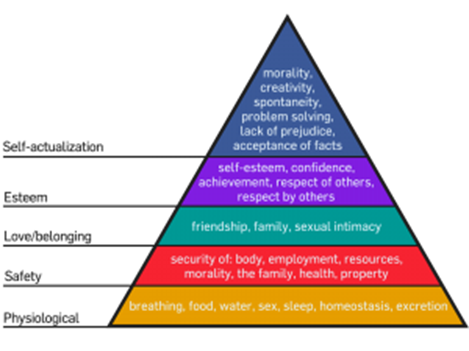
Self-concept maintenance refers to how people maintain or enhance their sense of self. It is relatively fixed after a person reaches adulthood, but it can- and does -change based on the person’s experiences. The theory of self-concept maintenance states that we do not simply sit and wait for our self-concept to develop: we take an active role in shaping our self-concept at all ages.
Lastly, let’s look into the Indian concept of Self. Study of self in the Indian traditions, reveals that the core of Indian self is metaphysical, and it has been the focus of study by philosophers as well as contemporary psychologists. In the Indian worldview, a person is not limited to the physical body, but has multiple perspectives. There is a general agreement that the metaphysical self, Atman, is the real self. The rich indigenous concept of self has significant insights that would be missed by merely following the Western psychological approach employed in the study of self.

The Sanskrit word for the feeling of personal identification or self-sense in general is called aham (अहम्), which is the English word for "I" in Indian culture. Therefore, the I-feeling that the questioner is interested in in the "Who am I" question is aham (अहम्), and it is seen to be a function of the mind or mental apparatus known as antahkarana (internal organ). 'Being' is represented by aham in the ontological sense (ontology is the study of the nature of being). At the psychological level, the function is called ahamkara, and it encompasses all of our daily thoughts and feelings about ourselves.
The concepts of identity and self are: Atman (आत्मन्), Purusha (पुरुषः), Jiva (जीवः), Dehin (देहिन्), Ksetrajña (क्षेत्रज्ञः), Ahamkara (अहंकारम्), Ahambhava (अहंभावम्), Asmita (अस्मित), Jnata (ज्ञाता), Bhokta (भोक्ता), and Karta (कर्ता), which are used in different contexts with specific meaning and significance. Upanishads also declare that this self is Brahman or ―I am Brahman (aham brahmasmi).
Many Indian and Western scholars, in the recent decades have studied and presented the concept of self, based on Indian perspectives given in the Vedas, varna and ashrama dharmas, samskaras, and many more.
In Kathopanishad, the nature of Self is summarized by Yama as the eternal principle in person that never changes:
"This principle, Yama says, is tinier than the atom and larger than the largest of things, it is the One underlying the Many, the Permanent (nitya) behind the Ephemeral (anitya) in the entire universe. It cannot be divided or destroyed; the Self is not killed by the destruction of the body. It is by knowing the changeless Self behind all the changes that one attains immortality."
Psychological Self
Beyond the physical self, Indian psychology includes the psychological self, formed by mental aspects like manas (mind), buddhi (intellect), and ahankara (ego). When buddhi aligns inward toward Atman, it detaches from worldly desires, seeking a state of satisfaction and neutrality, as described in the Bhagavad Gita (4.22). The concept of gunas (sattva, rajas, tamas) also influences buddhi’s decisions and behaviors.
Social Self
The social self is shaped by cultural values, particularly individualism and collectivism. Western cultures typically emphasize individualism with a clear, independent self-concept, while Eastern and Indian cultures promote collectivism, with a shared, interdependent self. In India, this interdependence aligns with Dharma, a social and moral code that strengthens communal bonds and stability. The Indian self is thus deeply connected to family and society, with terms in Indian languages for extended family members reflecting this cultural emphasis on close-knit relationships.
The distinction of self in individualism and collectivism are:
Aspect | Individualism | Collectivism |
Concept of Self | Independent | Interdependent |
Relationship Between Self and Groups | Develop ties to meet personal needs rather than to serve others | Satisfy both personal needs and those of the group |
Relationship Between Self and Groups | No strong distinction | Clear distinction between ingroups (family, trusted) and outgroups (strangers) |
Goal Pursuit | Pursue personal goals without compromising; change ingroups to achieve personal goals | Subordinate personal goals to collective goals; may involve self-sacrifice |
Relationship with Society | Follow personal desires, values, and beliefs; society values individual expression | Conform to societal norms and manage social settings accordingly |
Motivation | Driven by individual desires and personal attitudes; few norms | Driven by duty towards social norms, especially in work and personal relationships |
Nature of Social Exchange | Rational, equal exchanges based on cost-benefit analysis; new relationships formed as needs change | Inherited, long-term relationships valued even if cost-ineffective; emphasizes communal responsibility |
Panchakosha model of self
Based on the Panchakoshas presented in the Taittriya Upanishad the following classification gives rise to a model of self-having the following elements:
Self | Kosha | Elements | Functions |
Metaphysical Self (the I-ness) - Subtlest | Anandamaya Kosha | Jivatma (Atman Embodied) | Kartrtva (doer) and Bhoktrtva (enjoyer) |
Psychological Self (Mental and Cognitive faculty) Subtle | Vijnanamaya Kosha | Buddhi (the discriminative decision-making faculty) | vijñāna—understanding, knowing, direct cognition, wisdom, intuition and creativity. |
Manomaya Kosha | Manas, (the cognitive faculty) Antahkarana Ahamkara | understanding, thoughts, ideas perception, processing the inputs of sense-organs | |
Physical Self (Physiological and Physical faculties) Gross | Pranamaya Kosha | Physiological functions of the body | Functional aspects of the body such as breathing, excretion, digestion etc. |
Annamaya Kosha | The physical body made of panchabhutas | Human body and its parts such as, tissues, bones, skin, organs etc. |
My takeaways from the movie:
Inside out 2 doesn’t just show sense of self it also shows how life events, friendships, emotions, thought patterns change when you grow up, and the dialogue is really relatable which says that “I guess that’s what happens when you grow up, you feel less joy”, according to me this means that when you grow up you don’t just experience joy, you also experience fear, anxiety, sadness, boredom, and many other emotions.
Anger in the movie says that “You made lot of mistakes, a lot. And you’ll make a lot more in the future”, which is very true as we grow up, we are going to make mistakes, humans are never perfect and it’s completely alright to make mistakes, but learning from them and correcting yourself is what matters.
At the end of the movie Joy says to Anxiety that 'Why Don't We Take a Seat in Our Special Chair?', in this scene we could see how Joy was trying to calm Anxiety by making her sit comfortably on her seat and offering her some hot tea to drink and Joy also tells her we can’t control what decision does Riley takes.
This shows that emotions can’t define what a person is.
Anger tells Joy that she's delusional because she can't see that the Riley they knew is gone. Joy responds, "Of course I'm delusional! Do you know how hard it is to stay positive all the time?". This scene portrays that we cannot always stay positive there will also be times were we will break down, get frustrated, feel demotivated, and feel negative.
Finally, Inside Out 2 teaches us, we must be careful not to let anxiety go into overdrive with "catastrophic thinking" by imagining endless chains of negative events. Catastrophic thinking often comes with over-generalised states accompanied by a sense of extreme certainty.
Conclusion
In conclusion, the exploration of sense of self, as portrayed in Inside Out 2, offers a profound look into the development and preservation of personal identity through the lens of emotions, beliefs, and social influences. The movie illustrates how pivotal life events, evolving friendships, and the impact of emotions like anxiety can either strengthen or destabilize one’s sense of self. By shedding light on the concept of self as explained by Carl Rogers and the Indian philosophical perspective, we gain a deeper understanding of how identity forms through self-image, ideal self, and self-esteem, which are influenced by experiences and relationships.
Inside Out 2 serves as a reminder that personal identity is dynamic, shaped by both internal and external factors, and that navigating through complex emotions is part of maturing and forming a more resilient self-concept. The film underscores the importance of embracing diverse emotions, making space for them, and recognizing that self-identity evolves as we grow. This reinforces the idea that mistakes and challenges are integral to personal growth, helping us build a stable and adaptable sense of self that remains true amidst life’s inevitable changes.
References:
Klein. A. (2020). ‘Who Am I?’ How to Find Your Sense of Self. Healthline. https://www.healthline.com/health/sense-of-self#factors
Cherry. K. (2024). What Is Self-Concept? The Fundamental "Who Am I?" Question. Verywell mind. https://www.verywellmind.com/what-is-self-concept-2795865#:~:text=How%20Carl%20Roger's%20Defines%20Self,that%20impacts%20your%20self%2Dconcept.
Dharmawiki. (2023). Indian Concept of Self. Dharmawiki. https://dharmawiki.org/index.php/Indian_Concept_of_Self#cite_note-:32-4

Comments